

Buying a House With a Septic Tank in Florida: What You Need to Know Before You Close
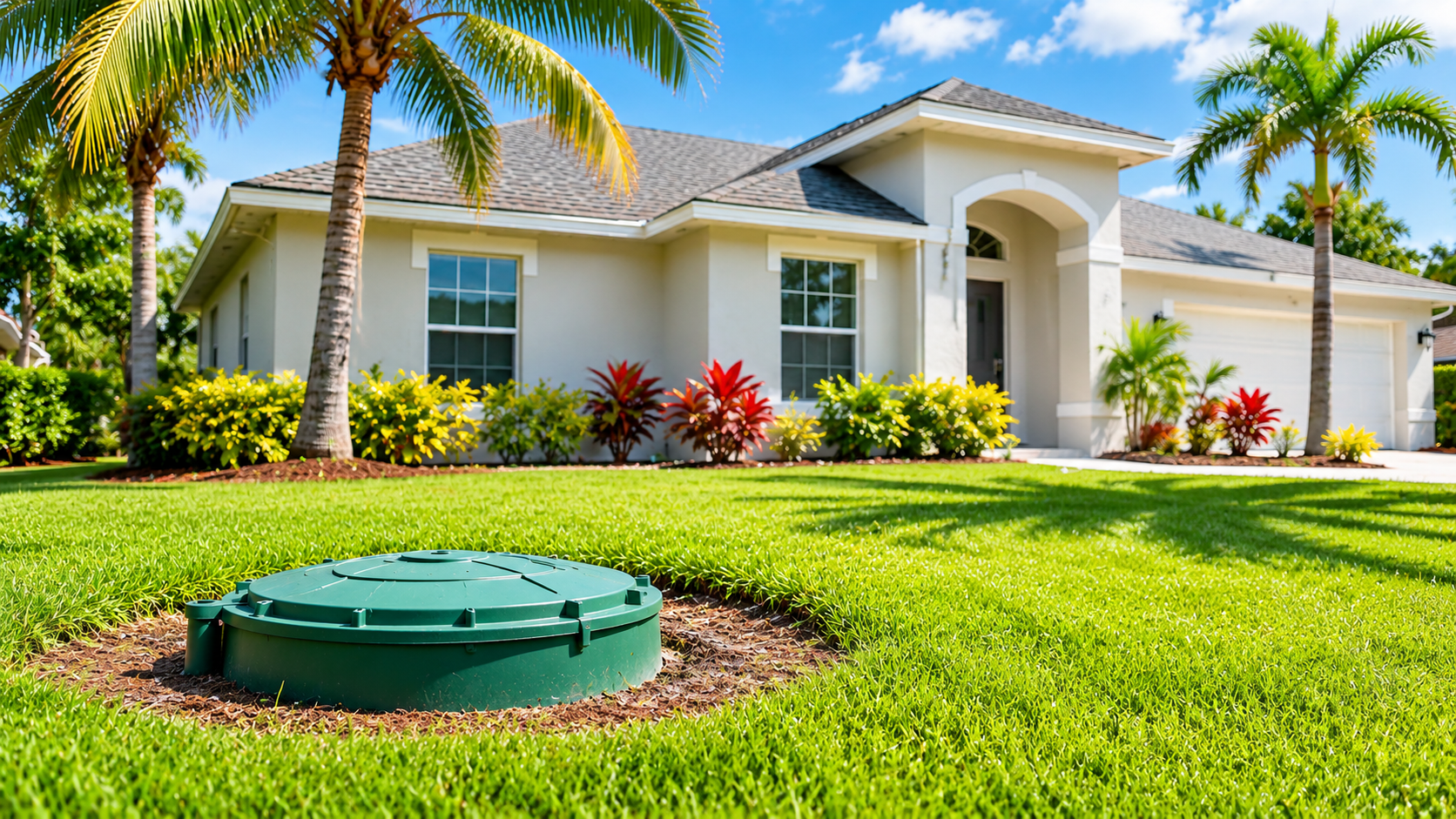
You found the property. An acre of land, mature trees, room for a workshop or a barn, and just the quiet you wanted. Then the listing sheet says "septic tank," and you pause.
A septic system is not a reason to walk away from a house. In neighborhoods like Plantation Acres, where estate-scale lots and horse-friendly zoning are common, septic is how these properties have always worked. Homes with a septic system do require a different inspection strategy than a home on municipal sewer, and buyers who skip that step are the ones who get an expensive surprise.
This guide covers what to check, what Florida law does and does not require in a home with a septic tank, and what the numbers look like.
How a Septic System Works, Briefly
A septic system handles wastewater on your property instead of piping it to a municipal plant. Waste flows into a buried tank where solids settle out. The remaining liquid drains into a drain field (perforated pipes in gravel) where soil filters it before it reaches groundwater.
The system depends on the surrounding soil, so drainage and the seasonal water table matter enormously in flat, wet South Florida. Solids accumulate and must be pumped out periodically, most needing to be pumped every 3-5 years. Neglect any of these factors, and you get failures that are unpleasant and expensive in equal measure.
Florida Does Not Require a Septic Inspection When You Buy
Section 381.0065 of the Florida Statutes states that "an inspection of a system may not be mandated by a governmental entity at the point of sale in a real estate transaction." No city, no county, and no state agency will require a septic inspection before your closing. The statute also states that existing permits for installation, modification, or repair transfer with the title to the property. That means this is on you!
This responsibility is the most important thing a new septic system homeowner needs to understand. If you want to know the condition of the system you are inheriting, you have to ask for the inspection yourself before you purchase, and write it into the contract as a contingency. The EPA's advice to homebuyers is exactly that: have the system inspected before you buy a home.
A standard home inspection does not include a meaningful septic evaluation. You need a separate one by a licensed septic contractor, and you should budget both the money and the calendar days for it inside your inspection period.
One more piece of context: since July 1, 2021, Florida's onsite sewage program has been administered by the Department of Environmental Protection rather than the Department of Health. That matters when you go looking for permit history on a system installed in 1978, because you need to know who holds the records.
What a Proper Septic Tank Inspection Covers
Locating and opening the tank
The contractor has to physically find and open the tank, not just look at the ground above it. An inspection where nobody lifts a lid is not an inspection. On older properties, the location is often undocumented, and finding it is part of the job.
Tank condition and sludge levels
The inspector measures solids levels and examines the tank for cracks, corrosion, and root intrusion. A compromised tank is a replacement, not a repair.
The drain field
This is where you can really lose money. Warning signs for a damaged drainfield are soggy or unusually green grass above the field, slow drains throughout the house, and outdoor odor. A saturated or clogged drain field needs replacing. Replacement can become a far larger project than pumping a tank.
Capacity versus the house, and permit history
A septic system is often built to accommodate the home's original size. A three-bedroom septic system serving a house a previous owner expanded to six bedrooms is undersized, and it can fail. If the property has additions, ask whether the system was upgraded to match, and whether that work was permitted.
Pull the records either way, and know that you're dealing with recent changes. Under HB 589, signed in May 2026, a Florida municipality no longer requires a separate septic construction permit before issuing a building or plumbing permit on a single-family home. The owner or builder now simply needs to show proof that a septic application was submitted. If construction begins before septic approval comes through, the property owner carries all legal, financial, and safety liability for it.
That makes permit history on recent work more worth checking. Unpermitted septic work was already common on older rural properties, and it becomes your problem the day you take title.
What It Costs to Get A Septic Inspection
An inspection typically runs a few hundred dollars. Routine pumping is also a few hundred. Tank replacement runs into the thousands. Drain field replacement is the expensive one and can reach five figures, particularly where high water tables or limited space complicate the design. Costs vary by system size, soil, and access, so treat these as planning ranges and get local quotes.
The inspection costs a rounding error compared to the repair it might reveal. And a system near the end of its life is not necessarily a dealbreaker; it can become an important part of your negotiation when buying.
Living With a Septic System
Septic maintenance is undemanding but unforgiving of neglect. Regular maintenance is key, so keep the tank pumped on schedule. Keep anything other than waste and toilet paper out: no wipes, no grease, no harsh chemicals. Keep vehicles, structures, and deep-rooted trees off the drain field, and direct gutters and irrigation away from it.
Buyers coming from municipal sewer expect a huge burden. In practice, a properly maintained septic system needs one appointment every few years.
Why This Matters in Plantation Acres
Broward County is densely developed, but Plantation Acres can be a genuine exception: estate-scale lots, grazing pastures, working horse farms and the Plantation Acres Saddle Club. That rural character is exactly why many properties there run on septic and private wells rather than city utilities.
If you are shopping that market, septic literacy is not optional. It is one of several things that separate buyers who know what they are looking at from buyers who are guessing.
Should I still buy a house with a septic tank?
Yes, provided you inspect it properly! Septic systems are standard in many parts of Florida, and a well-maintained one is not a liability. The risk is not the septic system itself, it's buying without knowing the system's condition, age, or permit history.
How long does a septic tank last?
The EPA puts the average lifespan of a septic system at 15 to 40 years, and notes it can last longer if properly maintained. Concrete tanks tend to be long-lived; drain fields have a shorter service life. Because so much depends on maintenance history, soil, and water table, age tells you far less than an inspection does.
How often should a septic tank be pumped?
The EPA's guidance is approximately every three to five years, depending on tank and household size. When you buy, ask the seller for pumping records; if none exist, budget to pump shortly after closing so you start from a known baseline.
Can I get a mortgage on a house with a septic tank?
Generally yes: conventional financing does not typically treat septic as an obstacle. Some government-backed programs apply extra property requirements, and appraisers may flag a visibly failing system. Tell your lender early that the property is on septic, so any extra documentation happens inside your timeline rather than at the closing table.
How do I know if a septic tank is failing?
Watch for slow drains throughout the house, sewage odor indoors or out, gurgling plumbing, standing water or unusually lush grass over the drain field, and backups into fixtures. Any of these warrants a full evaluation before you go further.
Does the seller have to tell me about septic problems?
Under Johnson v. Davis, a Florida seller who knows of facts materially affecting the property's value that are not readily observable must disclose them. But disclosure depends on what the seller actually knows, and it is no substitute for your own inspection.
Talk to an Agent Who Knows These Properties
Fleur Realty Group is headquartered in Plantation and works these acreage and equestrian properties regularly. We know which inspectors to call, what permit history to pull, and how to turn a finding into leverage.
Considering a septic property anywhere in Broward County?
Get in touch. Selling one? Start with a free home valuation.
Fleur Realty Group, Inc.
1250 South Pine Island Road, Suite 450, Plantation, FL 33324
(954) 673-4347
Browse Plantation Acres Properties → https://www.fleurrealtygroup.com/properties
A septic system is not a reason to walk away from a house. In neighborhoods like Plantation Acres, where estate-scale lots and horse-friendly zoning are common, septic is how these properties have always worked. Homes with a septic system do require a different inspection strategy than a home on municipal sewer, and buyers who skip that step are the ones who get an expensive surprise.
This guide covers what to check, what Florida law does and does not require in a home with a septic tank, and what the numbers look like.
How a Septic System Works, Briefly
A septic system handles wastewater on your property instead of piping it to a municipal plant. Waste flows into a buried tank where solids settle out. The remaining liquid drains into a drain field (perforated pipes in gravel) where soil filters it before it reaches groundwater.
The system depends on the surrounding soil, so drainage and the seasonal water table matter enormously in flat, wet South Florida. Solids accumulate and must be pumped out periodically, most needing to be pumped every 3-5 years. Neglect any of these factors, and you get failures that are unpleasant and expensive in equal measure.
Florida Does Not Require a Septic Inspection When You Buy
Section 381.0065 of the Florida Statutes states that "an inspection of a system may not be mandated by a governmental entity at the point of sale in a real estate transaction." No city, no county, and no state agency will require a septic inspection before your closing. The statute also states that existing permits for installation, modification, or repair transfer with the title to the property. That means this is on you!
This responsibility is the most important thing a new septic system homeowner needs to understand. If you want to know the condition of the system you are inheriting, you have to ask for the inspection yourself before you purchase, and write it into the contract as a contingency. The EPA's advice to homebuyers is exactly that: have the system inspected before you buy a home.
A standard home inspection does not include a meaningful septic evaluation. You need a separate one by a licensed septic contractor, and you should budget both the money and the calendar days for it inside your inspection period.
One more piece of context: since July 1, 2021, Florida's onsite sewage program has been administered by the Department of Environmental Protection rather than the Department of Health. That matters when you go looking for permit history on a system installed in 1978, because you need to know who holds the records.
What a Proper Septic Tank Inspection Covers
Locating and opening the tank
The contractor has to physically find and open the tank, not just look at the ground above it. An inspection where nobody lifts a lid is not an inspection. On older properties, the location is often undocumented, and finding it is part of the job.
Tank condition and sludge levels
The inspector measures solids levels and examines the tank for cracks, corrosion, and root intrusion. A compromised tank is a replacement, not a repair.
The drain field
This is where you can really lose money. Warning signs for a damaged drainfield are soggy or unusually green grass above the field, slow drains throughout the house, and outdoor odor. A saturated or clogged drain field needs replacing. Replacement can become a far larger project than pumping a tank.
Capacity versus the house, and permit history
A septic system is often built to accommodate the home's original size. A three-bedroom septic system serving a house a previous owner expanded to six bedrooms is undersized, and it can fail. If the property has additions, ask whether the system was upgraded to match, and whether that work was permitted.
Pull the records either way, and know that you're dealing with recent changes. Under HB 589, signed in May 2026, a Florida municipality no longer requires a separate septic construction permit before issuing a building or plumbing permit on a single-family home. The owner or builder now simply needs to show proof that a septic application was submitted. If construction begins before septic approval comes through, the property owner carries all legal, financial, and safety liability for it.
That makes permit history on recent work more worth checking. Unpermitted septic work was already common on older rural properties, and it becomes your problem the day you take title.
What It Costs to Get A Septic Inspection
An inspection typically runs a few hundred dollars. Routine pumping is also a few hundred. Tank replacement runs into the thousands. Drain field replacement is the expensive one and can reach five figures, particularly where high water tables or limited space complicate the design. Costs vary by system size, soil, and access, so treat these as planning ranges and get local quotes.
The inspection costs a rounding error compared to the repair it might reveal. And a system near the end of its life is not necessarily a dealbreaker; it can become an important part of your negotiation when buying.
Living With a Septic System
Septic maintenance is undemanding but unforgiving of neglect. Regular maintenance is key, so keep the tank pumped on schedule. Keep anything other than waste and toilet paper out: no wipes, no grease, no harsh chemicals. Keep vehicles, structures, and deep-rooted trees off the drain field, and direct gutters and irrigation away from it.
Buyers coming from municipal sewer expect a huge burden. In practice, a properly maintained septic system needs one appointment every few years.
Why This Matters in Plantation Acres
Broward County is densely developed, but Plantation Acres can be a genuine exception: estate-scale lots, grazing pastures, working horse farms and the Plantation Acres Saddle Club. That rural character is exactly why many properties there run on septic and private wells rather than city utilities.
If you are shopping that market, septic literacy is not optional. It is one of several things that separate buyers who know what they are looking at from buyers who are guessing.
Frequently Asked Questions
Should I still buy a house with a septic tank?
Yes, provided you inspect it properly! Septic systems are standard in many parts of Florida, and a well-maintained one is not a liability. The risk is not the septic system itself, it's buying without knowing the system's condition, age, or permit history.
How long does a septic tank last?
The EPA puts the average lifespan of a septic system at 15 to 40 years, and notes it can last longer if properly maintained. Concrete tanks tend to be long-lived; drain fields have a shorter service life. Because so much depends on maintenance history, soil, and water table, age tells you far less than an inspection does.
How often should a septic tank be pumped?
The EPA's guidance is approximately every three to five years, depending on tank and household size. When you buy, ask the seller for pumping records; if none exist, budget to pump shortly after closing so you start from a known baseline.
Can I get a mortgage on a house with a septic tank?
Generally yes: conventional financing does not typically treat septic as an obstacle. Some government-backed programs apply extra property requirements, and appraisers may flag a visibly failing system. Tell your lender early that the property is on septic, so any extra documentation happens inside your timeline rather than at the closing table.
How do I know if a septic tank is failing?
Watch for slow drains throughout the house, sewage odor indoors or out, gurgling plumbing, standing water or unusually lush grass over the drain field, and backups into fixtures. Any of these warrants a full evaluation before you go further.
Does the seller have to tell me about septic problems?
Under Johnson v. Davis, a Florida seller who knows of facts materially affecting the property's value that are not readily observable must disclose them. But disclosure depends on what the seller actually knows, and it is no substitute for your own inspection.
Talk to an Agent Who Knows These Properties
Fleur Realty Group is headquartered in Plantation and works these acreage and equestrian properties regularly. We know which inspectors to call, what permit history to pull, and how to turn a finding into leverage.
Considering a septic property anywhere in Broward County?
Get in touch. Selling one? Start with a free home valuation.
Fleur Realty Group, Inc.
1250 South Pine Island Road, Suite 450, Plantation, FL 33324
(954) 673-4347
Browse Plantation Acres Properties → https://www.fleurrealtygroup.com/properties